Duomo: Bible & Daily Devotions
- 4.4
- Rating
- 500.00K
- Installs
- Free
- Price

 Analysis by App-foxy
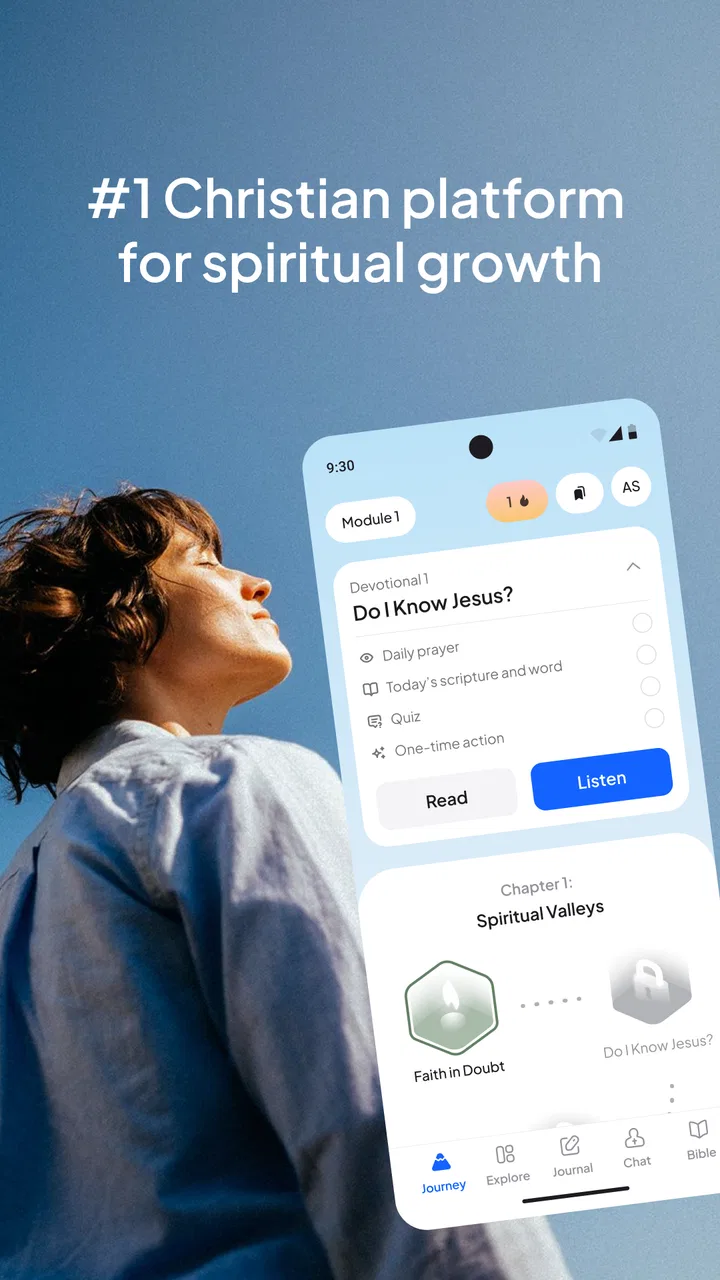
I approached Duomo: Bible & Daily Devotions as a practical reading companion rather than as a replacement for a printed Bible or a full study library. Its focus is clear: bring Christian reading and daily devotional time into a phone-friendly format. That makes it most appealing when your routine is already built around short mobile sessions, but the experience also depends on how comfortably you can use it when your connection, attention, or available screen time changes.
The app sits in the Books & Reference category and is developed by DUOMO APP LIMITED. It is free to install, with in-app purchases ranging from $9.99 to $89.99 per item. The store presents it as a Christian platform, and the Everyone age rating makes its intended audience broad. I would describe it as a gentle starting point for people who want a more regular devotional habit, especially those who prefer guided reading to opening a large reference book and deciding where to begin.
How Duomo fits real mobile reading habits
I find that Duomo fits best when I treat a phone session as one small part of a reading routine, not as a substitute for every other way I engage with Scripture. In this section, I’ll look at how a brief session can move from a spare moment to a useful takeaway, including what helps that transition feel intentional and where I’d choose a different tool.
You May Also Like

 Blood Strike: 2.5 Anniversary
Blood Strike’s Loadouts Turn Every Drop Into a Tactical Gamble
A close look at Blood Strike’s custom loadouts: how fast access to signature weapons reshapes its battle royale rhythm, rewards preparation, and narrows the gap between fights.

 Pandora - Music & Podcasts
Pandora’s Music Is Easy to Start, but Harder to Recover
Pandora’s strength is its low-effort path from a seed to a station. Its weak spot is how much confidence it asks you to place in connection, setup, and quiet recovery.

 8 Ball Pool
 Is Built on Rivalries, Rematches, and Routine
A close look at the rivalries, rematches, shared routines, and unanswered safety questions that turn a quick pool match into a persistent mobile community.

 Samsung Music
’s Quiet Strength Is Playing What You Already Own
Its reach comes less from spectacle than from dependable access to a personal library. That simplicity is both the app’s strongest retention engine and its ceiling.

 AccuWeather: Weather Radar
AccuWeather Review: A Quick, Clear Forecast for Everyday Decisions
For everyday plans, the best forecast is the one you can understand quickly. AccuWeather makes rain timing, radar, and local conditions easy to act on, with a few trade-offs.

 Hill Climb Racing
Why Hill Climb Racing Still Turns Crashes Into One More Run
A tiny car, a bumpy hill and one more upgrade: Hill Climb Racing keeps resurfacing because its simple chaos makes every near-miss feel personal.
More From Our News Desk



The first connection matters more than the store summary suggests
My first practical observation is that this is an app you should treat as a connected reading experience. The moment you open a devotional platform, the phone may need to retrieve current content, account-related information, or other parts of the experience before you can settle into reading. I would not plan an important quiet-time session around the assumption that every part will be available when reception is poor. The safest approach is to open it before you need it, while you have a reliable connection, and see how smoothly the material you want to read becomes available.
That small habit changes the experience. If I launch a book app while waiting for transport, I am happy to spend a few seconds getting oriented. If I am trying to begin a morning prayer routine, a loading delay feels more disruptive because it breaks the mental transition from ordinary phone use to reflection. Duomo works best when I give it a little preparation instead of treating it like a book that is guaranteed to be immediately reachable in every circumstance.
This is also where it differs from a printed Bible. Paper has no network dependency, no update screen, and no question about whether the next page will appear. On the other hand, paper does not offer the convenience of carrying a devotional platform in the same device I already use for reminders, messages, and travel. Duomo’s advantage is accessibility; its trade-off is that the phone remains part of the experience, with all the distractions and connectivity variables that come with it.
Short sessions are its natural territory
I found the concept better suited to a repeatable daily rhythm than to long, uninterrupted study. A short session before work, during a lunch break, or at the end of the day feels more natural than trying to use the app as an extensive theological reference tool. The phone format lowers the barrier to starting, which matters when the real problem is not a lack of interest but the difficulty of making room for a habit.
A realistic example would be someone who leaves home early, reaches a station, and has a few quiet minutes before the day becomes busy. Instead of searching through several books or opening a browser full of unrelated tabs, that person can use Duomo as a defined point of entry for Christian reading. If the connection is stable, the transition can be quick. If the network is weak, the same scenario becomes a reminder to prepare earlier or choose a physical alternative for that particular morning.
That makes the app especially suitable for people who want structure without carrying extra material. It is less convincing for readers who already own a well-organized study Bible, prefer handwritten notes, or want a broad scholarly library with detailed cross-references. Duomo’s value is not that it replaces every other resource. Its value is that it can make a modest devotional moment easier to begin.
Using it in public spaces requires deliberate attention
Mobile reading has a social side that is easy to overlook. A phone is convenient in a café, on a commute, or in a waiting room, but it also invites interruptions. Notifications can pull me out of a reflective passage faster than a bookmark in a physical book ever could. I recommend starting with the phone’s own focus or do-not-disturb controls when the goal is prayerful reading rather than casual browsing.
This is not a flaw unique to Duomo, but it shapes whether the app feels calming or merely another item in a busy feed. A useful workflow is to decide the purpose before opening it: read a passage, sit with one idea, or complete a brief devotional pause. Without that intention, the phone can turn a meaningful activity into another quick check between messages.
Screen size also matters. A phone is comfortable for a few paragraphs, but people who enjoy comparing several passages at once may find a printed Bible or a larger reading device easier. I would use Duomo for portability and consistency, then switch to a larger reference when I want to study wording, context, or multiple sections side by side.
What happens when the connection fails?
The most important practical question is not whether the app is useful on a perfect network. It is what happens when the network is slow, unstable, or unavailable at the exact moment I want to read. Because the store details do not establish offline behavior, I would avoid assuming that all content remains accessible without a connection. Before relying on it for a flight, rural trip, basement room, or emergency kit, I would test the specific reading material in that environment rather than discovering the limitation at the worst time.
That test can be simple. Open the app while connected, move through the material you expect to use, then temporarily remove connectivity and check what remains usable. If a page has not been loaded or a section requires a fresh request, the result may be different from what you expect. This is a better approach than relying on a general belief that mobile reading apps automatically work offline.
When a session fails to load, I would first check whether other apps can reach the internet. If they cannot, the problem is probably the connection rather than the reading service. If other apps work, closing and reopening Duomo, moving to a stronger signal, or waiting briefly may resolve the interruption. I would also avoid repeatedly tapping buttons during a slow response, since that can make the interface feel more confusing and may lead to duplicate actions in any account or purchase flow.
The recovery plan matters for habit-building. If I lose ten minutes troubleshooting before every devotional session, the app becomes a barrier. A sensible backup is a bookmarked physical passage, a separate printed devotional, or a simple personal note with the reading plan I want to follow. That does not diminish Duomo; it acknowledges that a phone-based routine should have a low-tech fallback if continuity is important.
Keeping mobile data under control
For most readers, the main data-conscious decision is not the text itself but the surrounding use of the app. Reading on a dependable Wi-Fi connection is the most comfortable option when I am setting up a routine or exploring several sections. On mobile data, I would avoid opening the app repeatedly just to browse without a clear purpose, particularly in places where the signal is weak and the phone may keep trying to reconnect.
I also recommend watching the device’s own data-usage panel after a few days of normal use. That gives a more honest picture than guessing from the app’s category. If the app offers any content or account actions that feel larger than ordinary text reading, I would reserve them for Wi-Fi unless I specifically need them while travelling. Since the available store information does not document download controls or data-saving settings, I would not promise that a particular toggle exists; I would use the operating system’s network controls instead.
Battery awareness is part of the same issue. A short reading session should not be treated like a long video stream, but weak reception can make any connected app less pleasant because the phone works harder to maintain a signal. When I am travelling, I prefer opening the material before entering a low-signal area and carrying a charger or power bank if the phone is already near empty. These are ordinary precautions, but they make the difference between a dependable routine and one that depends on ideal conditions.
Free entry, paid boundaries, and choosing carefully
The free installation makes it easy to test whether the reading style fits you before spending anything. That is important because devotional content is personal: a format that feels encouraging to one reader may feel too guided, too brief, or simply different from the tradition another reader prefers. I would use the free experience long enough to judge the writing, navigation, and connection behavior before considering an in-app purchase.
The paid items sit between $9.99 and $89.99 each, so the upper end represents a meaningful commitment rather than an impulse purchase for many people. I would read the purchase screen carefully, confirm exactly what an item includes, and ask whether it supports a habit I already know I can maintain. Paying for more content does not automatically create a better devotional routine; consistency usually comes from choosing a manageable time and returning to it.
This is one area where Duomo should be compared with the usual alternatives honestly. A free website may offer a wider range of public Bible translations or articles, while a printed devotional gives a stable, distraction-free object and no network concern. A dedicated study app may be better for detailed searching and cross-referencing. Duomo makes the stronger case when the reader wants a focused Christian platform with a mobile-first routine and is comfortable evaluating optional purchases on personal value rather than assuming the free installation includes everything.
Who will appreciate it, and who should pass?
I think the best audience is someone who wants help starting or maintaining a daily Christian reading habit, uses a phone regularly, and prefers a guided experience over assembling resources from several places. It can also suit a reader who travels between home, work, and study and wants one familiar place to return to during small gaps in the day.
I would be more cautious recommending it to people with unreliable connectivity, strict mobile-data limits, or a strong preference for offline-first tools. It may also be the wrong choice for someone looking for an academic Bible reference system, extensive annotation, or a large library of non-Christian books. Those readers may be happier with a conventional e-reader, a printed study Bible, or a specialist reference app.
The age rating of Everyone supports the idea that the app is broadly approachable, but that does not mean every family should hand it over without guidance. Parents may still want to explore the reading experience themselves and decide whether the content and purchase flow suit their household. The same principle applies to church groups: Duomo can support personal reflection, but a group leader should not assume that every participant has identical access, connectivity, or willingness to pay.
What I would check before making it part of my routine
I would begin with three practical checks. First, I would open the app in the places where I expect to use it: at home, outdoors, and during a commute. Second, I would see how easily I can return to the material I care about after closing and reopening the app. Third, I would review the purchase choices without rushing, especially if a higher-priced item appears attractive during the first enthusiastic session.
I would also decide whether the phone helps or harms my concentration. If notifications and frequent app switching are a problem, I would create a dedicated reading window and silence interruptions. If the screen feels tiring, I would keep sessions shorter and use a physical Bible for longer study. This combination can work well: Duomo for a convenient daily prompt, print for slower exploration.
The current version is 2.3.1, and the app supports devices running Android 8.1 or later. That makes compatibility worth checking before installation, particularly on an older phone that is still reliable for basic reading. A supported operating system does not guarantee that every device will feel equally quick, so I would judge the experience on the phone I actually plan to use rather than on someone else’s newer model.
My connectivity verdict
Duomo: Bible & Daily Devotions has a clear place in the Christian reading landscape: it makes a devotional pause easier to carry into ordinary mobile life. Its strongest quality is convenience, especially for readers who need a simple starting point during a busy day. Its main limitation is equally practical: a connected phone is not as predictable as a printed book, and the app should not be treated as an unquestioned offline resource.
The public response is encouraging, with a 4.6 average from around 3.1 thousand ratings, and the app has passed 100 thousand installs. Those figures suggest that the concept is reaching a substantial audience, but they should complement rather than replace personal testing. The best question is whether it works in your actual routine, on your actual phone, with your actual connection.
My recommendation is to try the free version with a specific use case instead of browsing without a plan. Use it for a week of short sessions, test it in a weak-signal location, and notice whether it helps you read or simply gives you another reason to look at your phone. If it supports a steady habit, the optional purchases may be worth considering. If you need guaranteed offline access, deep study tools, or complete independence from connectivity, a printed Bible or a more explicitly offline-focused alternative will serve you better.
For me, the app succeeds when I treat it as a convenient doorway rather than the entire room. Its real strength is making a small devotional moment easier to begin, while its real trade-off is depending on a mobile environment that is never completely quiet or guaranteed. That balance makes it worth trying for the right reader, but not a universal replacement for every Christian reading tool.
FAQs for Duomo: Bible & Daily Devotions
01What features does Duomo: Bible & Daily Devotions offer?
Duomo: Bible & Daily Devotions provides a rich assortment of features including daily devotionals, multiple Bible translations, and a personalized reading plan. Users can enjoy audio Bibles, daily inspirational quotes, and a journal to record reflections. The app also offers offline access, making it convenient to use anywhere.
02Is Duomo: Bible & Daily Devotions free to use?
Duomo offers a free version with access to basic features like Bible reading and daily devotionals. However, there is a premium subscription option that unlocks additional features such as ad-free browsing, exclusive devotional content, and enhanced customization options for a more personalized experience.
03Can I use Duomo: Bible & Daily Devotions offline?
Yes, Duomo allows users to access certain features offline. You can download specific Bible translations and devotionals to read without an internet connection. This makes it a great tool for those who wish to continue their spiritual journey while traveling or in areas with limited connectivity.
04Does Duomo: Bible & Daily Devotions support multiple languages?
Yes, Duomo supports multiple languages, making it accessible to a global audience. Users can choose from a variety of Bible translations in different languages, ensuring that the app caters to a diverse user base and enhances the spiritual experience for non-English speakers.
05How often is new content added to Duomo: Bible & Daily Devotions?
Duomo frequently updates its content to keep the user experience fresh and engaging. New devotionals, inspirational quotes, and reading plans are added regularly. This ensures users have access to current and relevant spiritual resources to support their daily faith practice.
Pros
- User-friendly interface enhances navigation.
- Wide variety of daily devotionals available.
- Offline access ensures usability anywhere.
- Customizable reading plans for flexibility.
- In-app notes for personal reflections.
Cons
- Limited language options available.
- Ads can interrupt reading experience.
- Requires registration for full features.
- Occasional bugs in search functionality.
- Limited audio content for devotionals.

Duomo: Bible & Daily Devotions
Gallery